
Which Lehenga Suits a Pear-Shaped Body Type?
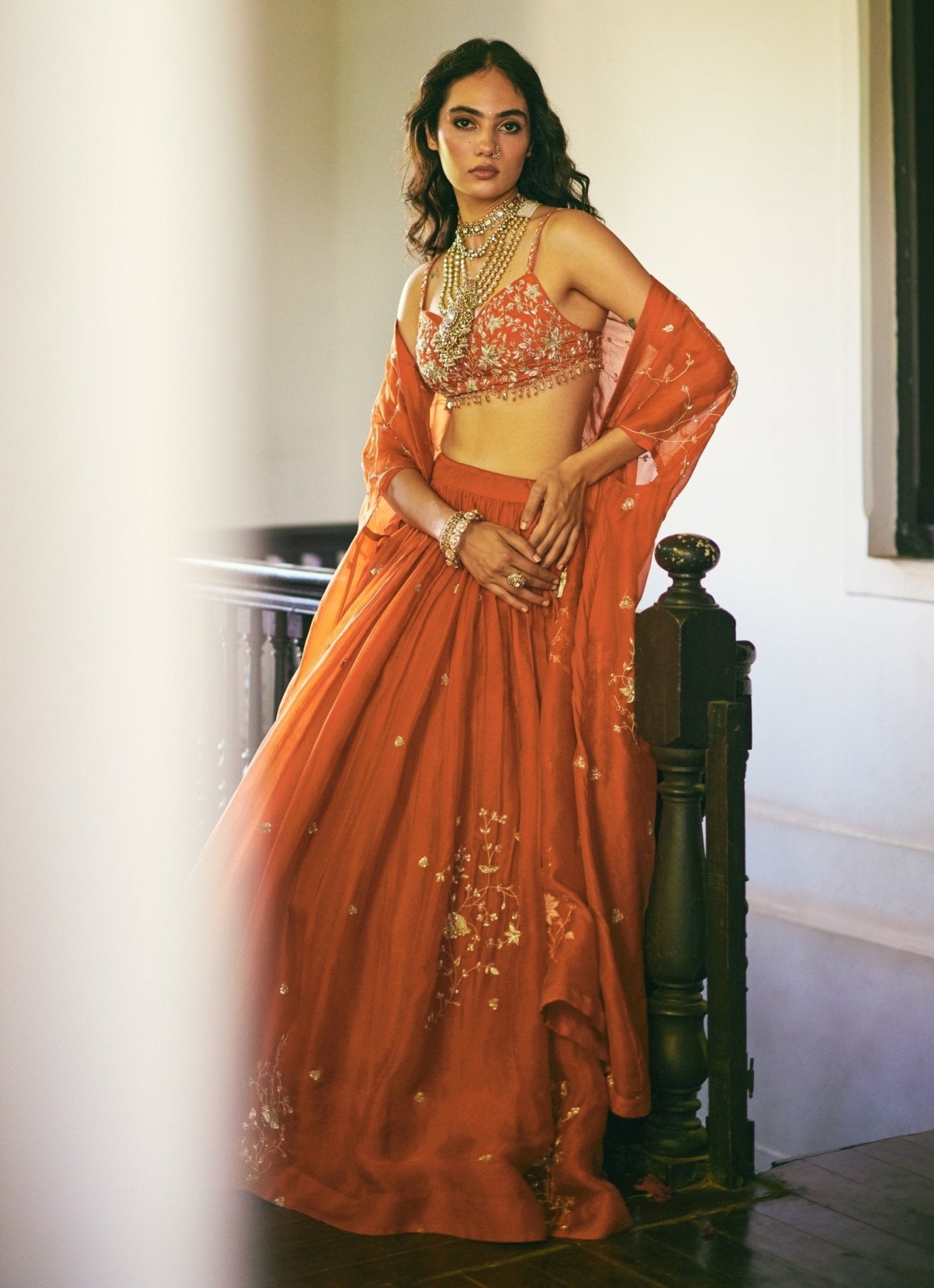
Quick style takeaways
- A-line and panelled constructions create a smooth fall from waist to hem for pear-shaped proportions.
- Lighter skirts prevent volume build-up at the hips and thighs.
- A statement blouse lehenga draws attention upward and balances the silhouette.
- Boat neck, off-shoulder and one-shoulder cholis broaden the upper frame.
- Strategic dupatta draping and correct waistband placement create the most flattering finish.
Pear-shape lehenga checklist
- Skirt: A-line / gentle flare / panelled construction for a clean fall
- Fabric: georgette, crepe, satin-silk blends, organza (with controlled volume)
- Work placement: keep it cleaner at the hips; build detail on the blouse and neckline
- Blouse: structure + sleeves + wide necklines (boat/off-shoulder/one-shoulder)
- Dupatta: drape to add shape at the shoulders, not bulk at the waist
How to Choose the Right Lehenga for a Pear-Shaped Body Type
Fabric choice matters. Opt for fabrics that fall softly rather than hold stiffness. Georgette, chiffon, crepe and satin-silk blends skim the hips without adding bulk. Avoid very heavy can-can or stiff underskirts— they create extra volume at the hips even when the lehenga fabric is light.
Let the silhouette do the balancing. A-line and panelled constructions (where the skirt is built with stitched sections) create a clean fall from the waist. This visually lengthens the frame and softens fuller hips, making it a reliable choice for bridesmaids and wedding guests who want ease with polish.
Build your look from the blouse upward. For pear-shaped body types, the blouse is your strongest styling tool. Embellishment, texture, structured sleeves, and statement necklines draw the eye upward naturally—this is why a statement blouse lehenga works so well for proportion.
Use dupatta draping strategically. Drapes that sit across the shoulders, frame the neckline, or rest over both arms help create presence at the top. Avoid draping that wraps tightly around the waist or sits heavily at the hip line.
What to Avoid (and What to Do Instead)
- Very stiff circular skirts → choose a gentler A-line fall or panelled construction.
- Heavy motifs clustered at hip level → keep the hip area cleaner; place detail on blouse/hem.
- Low-rise waistlines → place the waistband 1–2 inches above the natural waist for lift.
- Dupatta tied around the waist → drape across shoulders/arms to build the upper frame.
- Bulky tassels sitting on the hips → keep latkans minimal or position slightly off-center.
Fit Tip: Waistband Placement Changes Everything
The quickest way to elevate a lehenga for pear-shaped body type is correct waistband placement. Aim for the waistband to sit slightly above your natural waist (about 1–2 inches). This creates a longer leg line, smooths the hip area, and prevents the skirt from “pulling” visually downward. If your skirt is heavier, keep the waistband clean (no bulky gathers at the sides) and let the blouse + neckline do the statement work.
A-Line & Panelled Styles: Skimming, Not Clinging
For pear-shaped body types, the most flattering lehenga skirts are those that fall cleanly from the waist without hugging the hips. A-line silhouettes and panelled constructions achieve this beautifully. They create a vertical line that elongates the frame, soften the lower half, and keep movement effortless—perfect for mehendi, sangeet, and long wedding days.


Lighter Skirts with Heavier Blouses: Visual Balance Done Right
One of the easiest pear-shape styling rules is contrast: keep the skirt visually lighter and let the blouse lead. A heavy blouse light skirt combination draws attention upward, defines the upper body, and keeps the hips from feeling over-styled. It’s especially flattering for cocktail nights, sangeet, and reception looks—where you want polish without overwhelming volume.
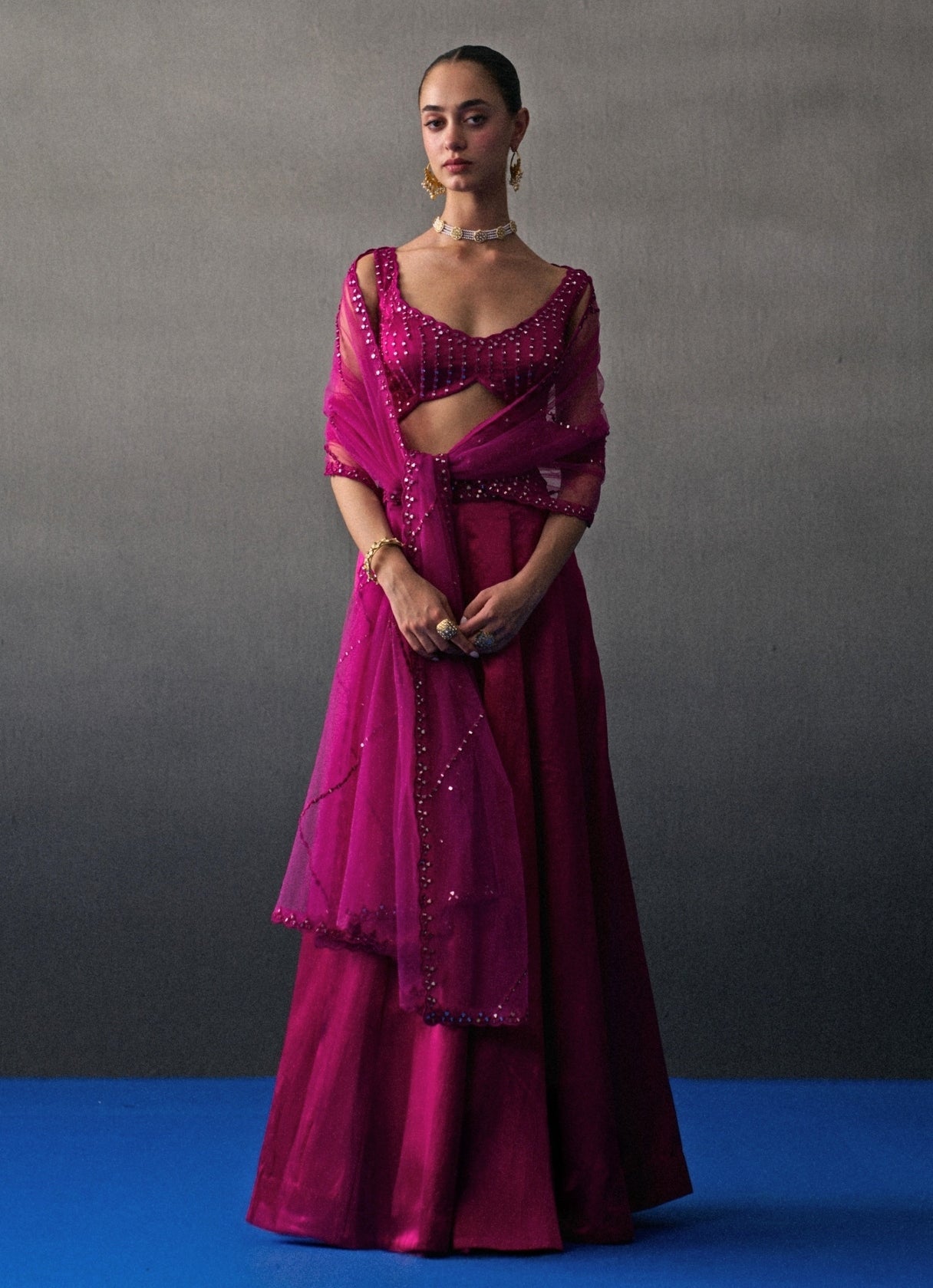

Off-Shoulder, Boat Neck & Embellished Cholis: Building the Upper Frame
For pear-shaped styling, necklines are the secret weapon. Off-shoulder, boat neck, and one-shoulder cholis visually broaden the shoulder line, creating balance with fuller hips below. Add embroidery, texture, or structured sleeves and you’ve got a true statement blouse lehenga—ideal for bridesmaids and wedding guests who want impact while keeping the skirt refined.


FAQs about lehenga for pear-shaped body type
Which lehenga silhouette suits a pear-shaped body type best?
A-line silhouettes and panelled constructions are most flattering because they skim over the hips without clinging. They create a smooth vertical line from waist to hem, balancing proportions while staying comfortable for long wedding functions.
Should pear-shaped body types avoid heavy lehenga skirts?
Very stiff or heavily structured skirts can add unnecessary volume at the hips. If you love a heavier skirt, balance it with a detailed blouse and choose a cleaner hip area (less dense motifs at hip level). For lighter events, fluid fabrics and gentle flare are the easiest win.
What blouse styles work best with a pear-shaped body type?
Off-shoulder, boat neck, wide necklines, one-shoulder styles, and embellished cholis work especially well. They broaden the shoulder line and draw attention to the upper body—perfect for a statement blouse lehenga.
How should dupattas be styled for pear-shaped proportions?
Use dupattas to add structure to the upper body rather than sit heavily at the waist. Draping across both shoulders, over both arms, or framing the neckline helps balance proportions. Avoid single-side drapes that cut across the hips horizontally.
Is this styling suitable for bridesmaids and wedding guests?
Yes. A-line and fluid skirts work beautifully for daytime events like mehendi and haldi, while embellished blouses and refined neckline-led styling elevate the look for evening receptions. The key is adapting fabric weight and blouse detail—not changing the silhouette entirely.
Styling a pear-shaped body type is about balance, not limitation. With the right skirt fall, a neckline-led blouse, and strategic draping, your proportions work together—comfortably, confidently, and beautifully.
MySize makes pear-shape styling easier: book a free 1–1 video call and we’ll help you place the waistband correctly, refine blouse proportions, and suggest dupatta drapes based on your outfit and measurements.


Leave a comment